Many injured construction workers assume workers’ compensation is their only option after an accident. While workers’ compensation benefits are often available, they are not always the only legal remedy. When a contractor, equipment manufacturer, property owner, or another company creates an unsafe condition, a third-party personal injury claim may also be available.
Conner, Marr & Pinski represents injured construction workers throughout Montana, including Great Falls, Billings, Helena, Butte, Kalispell, Missoula, Bozeman, Havre, Anaconda, and communities across the state.
Construction Projects Often Involve Multiple Companies
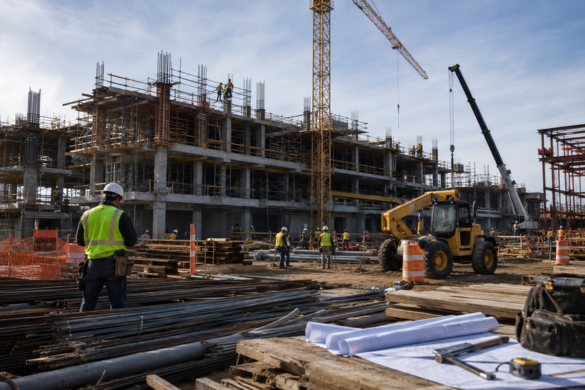
Unlike many workplaces, construction sites are rarely controlled by a single employer. General contractors, subcontractors, crane companies, electricians, plumbers, steel fabricators, concrete contractors, equipment rental companies, engineering firms, and property owners may all be responsible for different parts of the same project.
When one company creates an unsafe condition that injures another company’s employee, the claim may extend beyond workers’ compensation. Understanding who controlled the work area, who maintained the equipment, and who was responsible for job site safety is often one of the most important parts of investigating a serious construction accident.
Common Construction Accidents That May Involve Negligence
Construction accidents happen in many different ways, and each type of accident may involve different safety standards, contractors, or equipment.
Some of the most serious construction accidents include:
- Falls from scaffolding, ladders, roofs, or elevated work platforms.
- Crane collapses and crane load failures.
- Struck-by accidents involving falling tools, steel, or building materials.
- Caught-between and crush injuries involving heavy equipment or machinery.
- Trench collapses and excavation accidents.
- Forklift and telehandler accidents.
- Electrical injuries involving temporary power systems or overhead power lines.
- Fires and explosions caused by fuel, gas lines, or hazardous materials.
- Structural collapses involving partially completed buildings or concrete failures.
- Defective equipment accidents involving lifts, scaffolding, harnesses, or power tools.
Although OSHA identifies falls, struck-by incidents, electrocutions, and caught-between accidents as the “Fatal Four” construction hazards, serious injuries can occur anywhere safety procedures are ignored or hazards are left uncorrected.
OSHA Violations Can Help Explain How an Accident Happened
Following a serious construction accident, one of the questions investigators often examine is whether OSHA safety standards were followed.
OSHA regulations address issues such as fall protection, trench safety, crane operations, machine guarding, lockout and tagout procedures, electrical hazards, personal protective equipment, and worker training. A violation does not automatically establish liability, but it may provide important evidence showing that required safety practices were ignored before the accident occurred.
Construction projects may also be governed by site-specific safety plans, contractual obligations between contractors, and industry standards that extend beyond OSHA’s minimum requirements.
Who May Be Responsible for a Construction Accident?
Responsibility for a construction accident is not always limited to an employer.
Depending on how the accident occurred, liability may involve:
- General contractors responsible for coordinating site safety.
- Subcontractors performing work in the same area.
- Crane operators or crane companies.
- Equipment manufacturers.
- Scaffold manufacturers or installers.
- Property owners.
- Engineering firms.
- Equipment rental companies.
- Drivers delivering materials to the job site.
For example, a crane collapse may involve questions about equipment maintenance, assembly, load calculations, operator training, or communication between multiple contractors. A trench collapse may require examining excavation practices, soil conditions, and protective systems that should have been in place before workers entered the excavation.
Serious Injuries on Construction Sites Can Affect Every Part of Your Life
Construction workers perform physically demanding jobs, and severe injuries often make it difficult—or impossible—to return to the same type of work.
Falls from height frequently cause traumatic brain injuries, spinal cord injuries, multiple fractures, and internal injuries. Workers struck by heavy materials may suffer crush injuries, amputations, or permanent nerve damage. Electrical accidents can result in severe burns, cardiac injuries, and long-term neurological complications, while structural collapses and heavy equipment accidents often leave workers facing multiple surgeries and years of rehabilitation.
The long-term effects of these injuries often extend far beyond the initial hospital stay, affecting future employment, earning capacity, and daily life.
Third-Party Claims Are Common After Serious Construction Accidents
Construction sites create unique legal issues because so many companies work together on the same project.
When defective equipment, negligent subcontractors, unsafe job site conditions, or another company’s actions contribute to an accident, an injured worker may have the right to pursue a third-party personal injury claim in addition to workers’ compensation benefits. These claims focus on holding the responsible company accountable for creating or failing to correct dangerous conditions that placed workers at risk.
Investigating these cases often involves reviewing contracts, OSHA records, inspection reports, maintenance logs, witness statements, photographs, and project safety documentation to understand how the accident occurred.
Helping Injured Construction Workers Throughout Montana
Construction workers help build Montana’s homes, schools, hospitals, highways, and businesses. They deserve workplaces where safety is taken seriously.
If you were seriously injured on a construction site anywhere in Montana, contact Conner, Marr & Pinski for a free consultation. We’ll review what happened, answer your questions, and explain whether a third-party negligence claim may be available in addition to workers’ compensation.
Feel free to reach out and speak with our experienced team of professionals who are here to provide you with guidance.