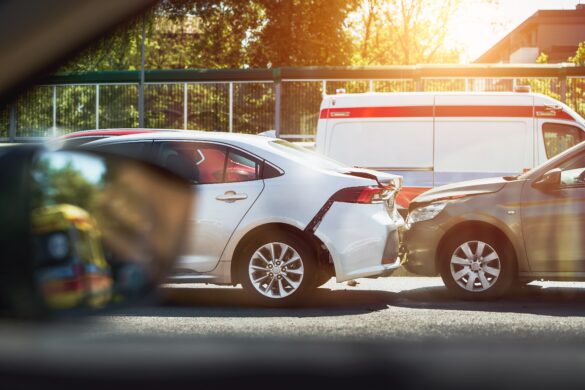
What you need to know from the start is that rear-end crashes cause real, serious injuries. The force of an impact from behind throws your body forward against your restraints, sends your head snapping back and forward, and compresses your spine in ways that can produce lasting damage even at moderate speeds.
Being rear-ended is jarring in every sense of the word. One moment you are stopped at a light in Great Falls or slowing down on Reserve Street in Missoula, and the next someone has driven into the back of your vehicle at full speed. The impact can happen in less than a second, but the consequences, pain, medical bills, missed work, and an insurance company that suddenly seems less helpful than their commercials suggested, can last for months or years.
Conner, Marr & Pinski has been representing injured Montanans in auto accident cases since 1974. We treat every client like family, we fight hard for the compensation they deserve, and we do not collect a fee unless we secure compensation for you. Call us at (406) 727-3550 to schedule a free consultation.
What Causes Rear-End Accidents in Montana?
Montana’s unique road conditions and driver behaviors often turn everyday traffic slowdowns into serious rear-end crashes. Understanding these common causes can help you recognize negligence when it happens and protect your right to full compensation.
How Montana’s Roads and Weather Make Rear-End Crashes More Dangerous
Montana’s geography and climate create conditions that make rear-end crashes both more likely and more severe than in many other states. Icy and snow-packed roads during winter months dramatically extend stopping distances, meaning a driver following too closely in July may have no chance at all of stopping in January. Rural highways with long straightaways lull drivers into inattention, and sudden slowdowns for wildlife, farm equipment, or unexpected turns catch unprepared drivers with no room to stop.
Black ice on Montana roads is a particular hazard. It is invisible until you are already on it, and by the time a driver realizes they cannot stop, the physics have already decided the outcome. Highway 2, Highway 93, and stretches of I-90 through mountain passes have all been the sites of serious rear-end crashes during winter conditions.
Distracted and Tailgating Drivers: The Most Common Causes We See
Weather explains some rear-end crashes, but driver behavior explains most of them. The two most common causes we see in rear-end collision cases are distracted driving and tailgating, and they often occur together.
A driver looking at their phone for three seconds at 60 mph travels the length of a football field without watching the road. If traffic has slowed or stopped during those three seconds, there is nothing to be done. Tailgating removes the only buffer that could have made a difference.
Who Is at Fault in a Montana Rear-End Collision?
In a Montana rear-end collision, figuring out who’s legally at fault can determine whether you get full compensation or anything at all. While the rear driver is usually presumed responsible, disputes over sudden stops or road conditions can complicate things under Montana’s comparative negligence rules.
When the Driver Who Hit You Is Clearly Responsible
In most rear-end collisions, the driver who struck the vehicle in front bears primary or complete fault. Montana law requires drivers to follow at a safe distance and maintain control of their vehicle. A driver who rear-ends another vehicle under normal conditions has almost certainly violated that standard, and the legal presumption of fault in rear-end crashes reflects that reality.
Clear-fault situations include crashes where the front vehicle was stopped at a red light or stop sign, crashes where the front vehicle was traveling at normal speed and the rear driver simply was not paying attention, and crashes where the rear driver was traveling at excessive speed for the road conditions.
How Liability Is Determined When the Other Driver Disputes Fault
Not every rear-end collision comes with an uncontested liability determination. The other driver’s insurer may argue that you stopped suddenly without warning, that your brake lights were not working, that you cut off their driver without leaving adequate space, or that road conditions rather than driver negligence caused the crash. These arguments are often made without supporting evidence and are designed to shift partial fault onto you in order to reduce the insurer’s payout.
Montana follows a comparative negligence rule, which means your compensation can be reduced by your percentage of fault. If you are found to be more than 50% at fault, you are barred from recovering anything. This is why determining who was at fault matters so much in rear-end cases where the other driver disputes responsibility. Evidence from the scene, witness statements, traffic camera footage, and vehicle data can all establish what actually happened and counter fault arguments that are not supported by the facts.
Common Injuries After a Rear-End Crash and Why They’re Often More Serious Than They Look
Injuries from rear-end crashes have a reputation for being minor, a reputation that serves insurance companies well and injured people poorly. The reality is that rear-end impacts cause serious and sometimes permanent injuries with regularity, and the severity of those injuries does not always correlate with the speed of the crash or the visible damage to the vehicles.
Common injuries we see in rear-end collision cases include:
- Whiplash: The rapid back-and-forth motion of the head and neck during a rear impact can stretch and tear muscles, ligaments, and tendons in the cervical spine, producing pain, stiffness, headaches, and limited range of motion that can persist for months or become chronic.
- Concussions and traumatic brain injuries: These occur when the brain moves within the skull during the impact, even without direct head contact. Cognitive symptoms, memory issues, and mood changes following a rear-end crash should be evaluated immediately and documented carefully.
- Spinal cord injuries: Severe rear-end crashes can result in partial or complete loss of function. Even less severe spinal damage, including herniated discs and nerve compression, can cause radiating pain, numbness, and weakness that limits daily function for years.
- Catastrophic injuries: Fractures, internal organ damage, and severe spinal trauma can result from high-speed rear-end impacts, particularly those involving larger vehicles striking smaller ones.
- Fatal injuries: In the most tragic cases, rear-end crashes are fatal, and surviving family members may have the right to pursue a wrongful death claim.
What makes rear-end injuries particularly challenging is that many of them are not immediately visible. Soft tissue damage and concussion symptoms can take days to fully present, and gaps between the crash and the onset of noticeable symptoms give insurance adjusters an opening to argue that your injuries were not caused by the collision. Seeing a doctor immediately after a rear-end crash, even when you feel relatively okay, closes that opening and protects your claim.
How Insurance Companies Handle Rear-End Accident Claims in Montana
The at-fault driver’s insurance company is not your advocate. Their job is to resolve your claim for as little as possible, and they are experienced at doing exactly that. Common tactics include:
- Contacting you quickly after the crash to obtain a recorded statement before you fully understand your injuries.
- Offering a fast settlement that covers your immediate medical bills but not your future treatment costs or non-economic losses.
- Characterizing your injuries as minor or pre-existing based on a selective reading of your medical history.
Montana law provides protections against unfair insurance practices, and insurers who act in bad faith when handling legitimate claims can face additional consequences. Knowing your rights and having an attorney who can identify and respond to bad-faith tactics is the most effective protection against being taken advantage of during the claims process.
At Conner, Marr & Pinski, we can handle the insurers on your behalf to make sure you receive the full compensation you deserve. Call us at (406) 727-3550 to get started today
What to Do After Being Rear-Ended in Montana
The steps you take in the hours and days following a rear-end crash can significantly affect your ability to recover full compensation.
Follow these steps to protect both your health and your legal claim:
- Call 911 and make sure law enforcement responds and documents the scene in a police report.
- Seek medical attention immediately, even if you feel relatively uninjured. Delayed symptoms are common in rear-end crashes and early documentation matters.
- Photograph all vehicles involved, the crash scene, road conditions, any skid marks, and your visible injuries before anything is moved.
- Get the other driver’s name, license plate, insurance information, and contact details.
- Collect contact information from any witnesses at the scene before they leave.
- Do not discuss fault or apologize at the scene, even if you feel compelled to be polite.
- Do not give a recorded statement to any insurance adjuster before speaking with an attorney.
- Contact Conner, Marr & Pinski as soon as possible at (406) 727-3550.
What Compensation Can You Recover After a Montana Rear-End Accident?
A successful rear-end collision claim in Montana can recover compensation for the full range of losses your injuries have caused, including:
- Medical expenses, covering emergency treatment, imaging, specialist visits, physical therapy, and future care costs
- Lost wages for time missed from work during your recovery
- Reduced earning capacity if your injuries limit your ability to work going forward
- Pain and suffering for the physical discomfort your injuries have caused
- Emotional distress and psychological harm resulting from the crash and your recovery
- Loss of enjoyment of life for activities your injuries have prevented you from doing
- Property damage to your vehicle and personal belongings
- Wrongful death damages if a family member was killed in the crash
The value of your claim depends on the severity of your injuries, the clarity of liability, and how effectively your attorney documents and presents the full scope of your losses. Conner, Marr & Pinski works with medical professionals, economic analysts, and expert witnesses to build claims that reflect everything you have lost, not just your current medical bills.
Frequently Asked Questions About Montana Rear-End Collision Claims
Is the driver who rear-ended me always at fault in Montana?
In many cases, yes. Montana law requires drivers to maintain a safe following distance and remain in control of their vehicle. A driver who rear-ends another vehicle under normal driving conditions has typically violated that standard. However, liability is not always automatic, and the other driver’s insurer may argue partial fault based on factors like sudden stopping or vehicle defects. How the evidence is gathered and presented determines how those arguments play out.
What if the other driver’s insurance is denying my claim?
A denial does not end your options. Insurance companies deny and undervalue claims regularly, and those decisions can be challenged. An attorney can assess whether the denial is based on a legitimate coverage issue or is a bad-faith tactic, and can pursue the claim through negotiation or litigation. Montana law provides remedies for bad-faith insurance conduct that can create additional leverage in disputed claims.
How long do I have to file a rear-end collision claim in Montana?
Montana’s statute of limitations for personal injury claims is three years from the date of the accident. While three years provides some leeway, waiting reduces the quality of available evidence and gives the other side time to build their defense. Contacting an attorney as soon as possible after the crash is always the better approach.
What if my back pain started a few days after the crash?
Delayed onset of pain is medically recognized in rear-end collision injuries, particularly soft tissue and spinal injuries that develop as inflammation progresses. The key is seeking medical attention as soon as symptoms appear and making sure your treatment records connect your condition to the crash. An attorney can help you document the timeline in a way that counters any insurer argument that delayed symptoms mean the crash was not the cause.
Do I need a lawyer for a rear-end accident claim in Montana?
You are not required to have one, but the practical case for representation is strong. Insurance companies have professional claims teams whose job is to minimize payouts. An experienced injury lawyer levels that playing field, knows how to value the full scope of your losses, and handles the negotiations while you focus on recovering. Conner, Marr & Pinski offers free consultations and works on a contingency fee basis, so there is no cost to finding out what your case is worth.
What if the at-fault driver was uninsured?
If the driver who rear-ended you has no insurance, your own uninsured motorist coverage may be the primary path to compensation. Montana requires insurers to offer uninsured motorist coverage, and if you carry it, a claim can be filed against your own policy. We evaluate all available coverage sources in every case we handle.
Why Conner, Marr & Pinski Handles Montana Rear-End Accident Cases
Conner, Marr & Pinski has represented injured Montanans in personal injury cases for more than 50 years. Our attorneys know Montana’s courts, know how insurers in this state handle claims, and know what it takes to build a case that produces a fair result.
We handle rear-end collision cases from Kalispell to Helena and across Montana. We bring the same commitment to every client regardless of where they are or how their accident happened. When you work with our firm, you get personal attention, honest communication, and attorneys who treat your case as the priority it is.
We handle cases on a contingency fee basis, meaning there is no cost to you unless we secure compensation on your behalf.
Rear-Ended in Montana? Contact Our Attorneys Today for a Free Consultation
If you were rear-ended in Montana and are dealing with injuries, medical bills, or an insurance company that is not treating you fairly, Conner, Marr & Pinski is ready to help. Contact us at (406) 727-3550 today to schedule your free, confidential consultation.
Feel free to reach out and speak with our experienced team of professionals who are here to provide you with guidance.