
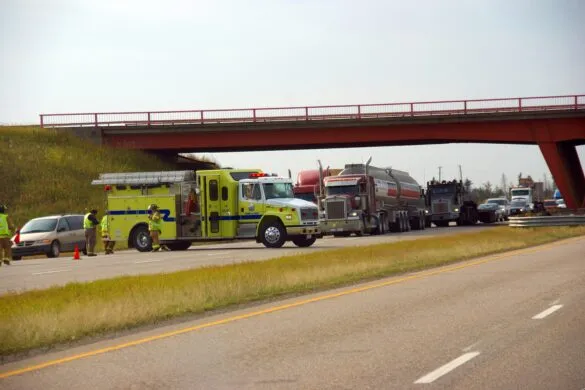
There is no reliable “average” truck accident settlement in Montana. What a claim is worth depends on what can be proven about fault, which companies and insurance policies are involved, the nature and duration of the injuries, the losses that will continue into the future, and the risks each side faces if the case goes to trial. Montana truck accident settlements are built on evidence, and that evidence-building process starts much earlier than most people expect.
At Conner, Marr & Pinski, we have represented injured Montanans and their families since 1974, including people hurt in crashes involving commercial trucks. We investigate quickly, identify every responsible party, and build the record a fair settlement requires. Contact Conner, Marr & Pinski at (406) 727-3550 for a free consultation.
The Process Starts With a Fast Trucking Investigation
A truck crash claim depends on reconstructing what happened, and much of the key evidence is in the hands of the trucking company. An early investigation typically gathers:
- Crash-scene evidence: Photographs, measurements, and debris patterns help show vehicle positions, speeds, and points of impact.
- Police reports and witness statements: These record officers’ observations and independent accounts of how the crash unfolded.
- Tractor and trailer condition: Inspecting brakes, tires, lights, and cargo securement can reveal mechanical failures or loading problems.
- Electronic logging device data: ELD records show the driver’s hours on duty and whether rest requirements were followed.
- Engine control module data: The ECM can record speed, braking, and throttle in the moments before impact.
- Dashcam footage: Forward-facing and driver-facing cameras may capture the crash itself or the driver’s behavior beforehand.
- Maintenance, inspection, and dispatch records: These documents show how the truck was maintained and what the carrier asked of the driver.
- Preservation letters: A letter sent to the carrier and its insurer formally notifies them to save specific records and the vehicles themselves.
Trucking Evidence Can Disappear on Different Timelines
Not all evidence is kept for the same length of time. Federal rules generally require carriers to retain drivers’ hours-of-service records for six months, but dashcam video may be overwritten within days, and ECM data can be lost once a truck is repaired or put back in service.
A standard police report is a useful starting point, but it rarely captures electronic data, company records, or the mechanical condition of the truck. Identifying and preserving those records early protects the claim.
More Than One Company May Be Involved
A truck crash can involve several parties beyond the driver. Depending on the facts, potentially responsible parties may include the motor carrier that employed or contracted with the driver, the owner of the tractor, a separate owner of the trailer, a broker or shipper that controlled the load or schedule, a maintenance contractor that serviced the truck, or a manufacturer of a defective part. None of these parties is automatically liable.
Each one’s responsibility depends on contracts, control over the operation, its own conduct, and whether that conduct caused the crash. Our Montana trucking accident lawyers investigate these relationships before settlement talks begin.
Insurance Can Be More Complicated Than in a Passenger-Car Claim
Ordinary Montana drivers must carry the state’s minimum liability coverage, as explained by the Montana Motor Vehicle Division. Commercial carriers operate under a different framework. Under FMCSA insurance filing requirements, for-hire carriers of non-hazardous property in vehicles of 10,001 pounds or more must carry at least $750,000 in bodily injury and property damage coverage.
Carriers of certain hazardous materials must carry $1 million, and carriers of explosives, poison gas, or radioactive materials must carry $5 million. These federal requirements are separate from Montana’s rules about who is at fault and how damages are allocated.
A Federal Minimum Is Not the Same as the Total Available Coverage
The federal minimum is a floor, not a cap. Many carriers buy higher limits, and a single crash may involve a primary policy, excess or umbrella policies, separate coverage for the trailer owner, and policies held by brokers or other companies. Some large carriers self-insure part of their risk.
For-hire and interstate carriers must also carry an MCS-90 endorsement, which can affect how coverage responds in some situations. Insurers frequently dispute which policy applies first or whether coverage applies at all, so the total coverage available can only be determined by reviewing the actual policies and the facts of the operation.
Damages Must Be Documented Before a Settlement Can Be Evaluated
A settlement can’t be fairly evaluated until the losses are documented. Damages in a Montana truck crash case may include past and future medical expenses, future care and rehabilitation, lost income, and reduced earning capacity. They can also include pain, physical disability, disfigurement, the loss of ability to perform household services, and property damage.
When a crash is fatal, families may pursue wrongful death and survival claims, which our Montana wrongful death lawyers handle. For serious injuries, future losses often require input from treating physicians, life care planners, and economists.
Montana Comparative Negligence Can Reduce or Bar Recovery
Trucking companies and insurers often argue that the injured person caused or contributed to the crash. Under Montana Code § 27-1-702, an injured person’s own negligence doesn’t bar recovery if it was not greater than the negligence of the person or the combined negligence of all persons against whom recovery is sought.
Any damages are reduced by the injured person’s percentage of fault. In practice, an injured driver found 20% at fault would see their recovery reduced by 20%, while a driver found more at fault than the defendants combined could recover nothing. Because these percentages directly affect settlement value, fault arguments should be reviewed carefully.
Multiple Defendants Can Complicate Fault Allocation
Montana Code § 27-1-703 governs how responsibility is divided when several parties share fault. Under the current version, a party whose negligence is 50% or less of the combined negligence is generally responsible only for its own share, while parties above that threshold can be jointly and severally liable for the remaining amount.
Exceptions apply when parties acted in concert or one acted as the other’s agent, which can matter in carrier and driver relationships. The fault of people the injured person has already settled with can also be considered. These rules make the order and terms of any settlement with one defendant an important strategic decision.
Settlement Negotiations Usually Follow Medical and Liability Development
Most serious truck cases don’t settle until the injured person’s medical condition is reasonably understood and liability evidence has been developed. Negotiations often begin with a demand package that presents the evidence of fault, medical records, bills, and documentation of future losses. The insurer responds, often with a lower offer or a dispute about fault or causation.
Expert input, such as accident reconstruction or medical testimony, may strengthen the claim, and many cases go through mediation before or after a lawsuit is filed. Settling early can bring faster resolution, but it risks undervaluing future treatment and lost earning capacity that aren’t yet known.
Liens and Reimbursement Claims Affect the Net Recovery
The settlement amount isn’t the same as what the injured person takes home. Health insurers, Medicare, Medicaid, and workers’ compensation carriers may claim reimbursement for benefits they paid, and medical providers may have unpaid balances. These claims often must be resolved before settlement funds can be distributed. Lien amounts can sometimes be negotiated down, and Montana law places limits on some insurers’ reimbursement rights, so reviewing each claim carefully can significantly affect the net recovery.
A Release Usually Ends the Claim
A settlement almost always requires signing a release, and once signed, it typically ends the claim permanently. Before signing, the agreement should clearly identify which parties are being released and which claims are covered. It should also address whether the terms are confidential, who is responsible for paying liens, and when any lawsuit will be dismissed. In multi-defendant cases, a release that’s broader than intended can unintentionally resolve claims against parties who haven’t paid.
Conner, Marr & Pinski Can Investigate a Montana Truck Crash
Conner, Marr & Pinski has been rooted in Great Falls since 1974, and from our office in the historic A.B. Guthrie Home, our personal injury attorneys represent injured people and families across Montana. We treat every client like family, offering personal attention while taking on powerful corporations and insurers.
Our attorneys have litigated complex cases against some of the largest companies in the world, and companies know we have the experience and resources to take a case to trial. In truck crash cases, that means moving quickly to preserve evidence, identifying every responsible company and policy, and negotiating liens so more of the recovery reaches our clients.
Contact Conner, Marr & Pinski at (406) 727-3550 to discuss your case.
Montana Truck Accident Settlement Frequently Asked Questions
How long does a truck accident settlement take in Montana?
It depends on the case. Timing is driven by how long medical treatment takes, how quickly evidence can be gathered, whether insurers dispute coverage or fault, and whether a lawsuit must be filed. Some claims resolve within months, while complex cases with serious injuries can take considerably longer.
What if I was partly at fault for the truck crash?
You may still recover. Under Montana’s comparative negligence law, your recovery is reduced by your percentage of fault as long as your negligence isn’t greater than that of the parties you’re seeking recovery from. Because fault percentages are often dis