

Contact us
Send Us Your Case Details
We’ll respond and let you know the best way to proceed with your case.


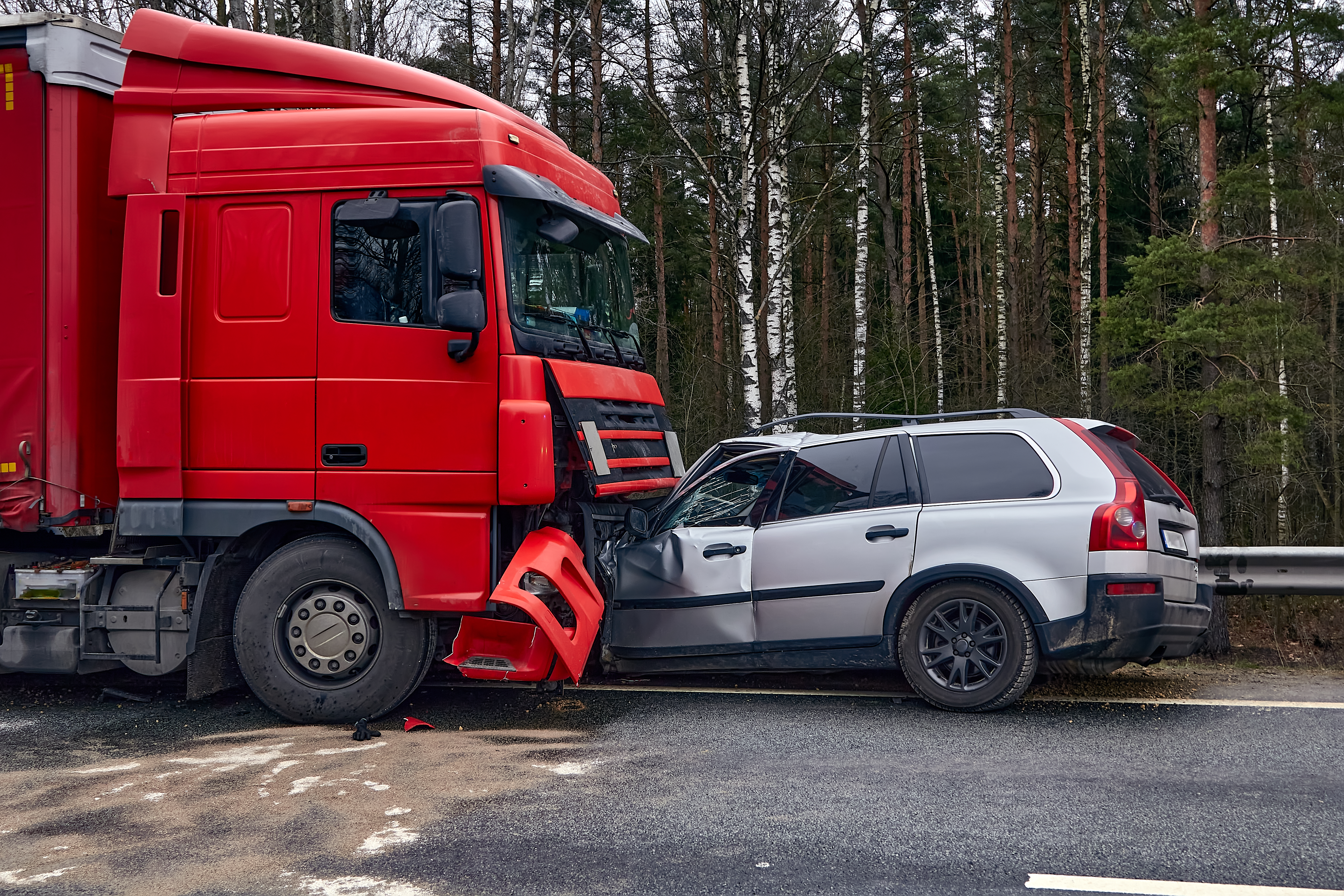
Losing someone in a fatal truck accident is a different kind of loss. It is sudden and violent, and it often leaves families trying to make sense of what happened while also managing funeral arrangements, fielding calls from insurance companies, and holding everything else together. If you are in that situation right now, this page is written for you.
At Conner, Marr & Pinski, we work with Montana families who have lost someone in a trucking accident or other serious crash. We know that the last thing you want to feel right now is pressured. What we want to do here is give you honest, clear information about what your family’s rights look like, what decisions need to be made sooner rather than later, and what mistakes to avoid in the early days while everything still feels like chaos. When you are ready to talk, we are here.
Commercial truck crashes kill at dramatically higher rates than collisions between passenger vehicles, and the reasons come down to physics that are simply unforgiving.
A fully loaded semi-truck can weigh up to 80,000 pounds. The average passenger car weighs somewhere between 3,000 and 4,000 pounds. When those two vehicles collide at highway speed, the outcome for the occupants of the smaller vehicle is often catastrophic regardless of fault or circumstance.
Stopping distance compounds the problem significantly. A commercial truck traveling at 65 miles per hour on dry pavement needs roughly 525 feet to stop completely. In wet or icy conditions, that distance increases. In Montana, where winter weather arrives early and stays late, where interstate highways cut through remote stretches with no lighting and limited guardrails, and where freight corridors carry heavy traffic at sustained highway speeds, those stopping distances become a matter of life and death on a regular basis.
The structural design of commercial vehicles also contributes to fatality rates. Underride collisions, where a passenger vehicle slides beneath the trailer of a semi-truck, are among the most deadly crash types in the country, and federal safety regulations governing underride guards have historically lagged behind what engineers know is possible.
Montana’s geography makes it one of the more dangerous states in the country for large commercial vehicle traffic. Vast distances, limited emergency response coverage, and weather that can change dramatically within hours create conditions where a serious crash can become fatal simply due to the time it takes for help to arrive.
Three major interstate corridors carry the bulk of Montana’s commercial freight traffic, and all three have seen fatal truck crashes in recent years.
Interstate 90 runs east to west across southern Montana, connecting the Idaho border to the Wyoming border through Missoula, Butte, Bozeman, and Billings. It is the state’s highest-volume freight corridor and carries significant hazardous materials traffic. Mountain passes, frequent weather events, and high sustained speeds make it consistently dangerous.
Interstate 15 runs north to south through Great Falls and Helena, connecting Canada to the south through a corridor that includes significant agricultural and energy sector freight. Winter conditions along I-15 are severe and frequently close or restrict sections of the highway.
Interstate 94 runs along the Yellowstone River corridor through eastern Montana, connecting Billings to the North Dakota border. Long, straight stretches at highway speed in a region with limited services and significant freight volume make fatigue-related crashes particularly common here.
When a fatal truck crash happens on any of these corridors, the trucking company and its insurers often have investigators and representatives on the scene or on the phone within hours. Families rarely have that kind of support in the immediate aftermath.
Understanding what caused a crash is essential to understanding who is legally responsible for it. Fatal semi-truck crashes in Montana are commonly caused by:
In many of these cases, responsibility extends beyond the truck driver to the trucking company itself. Carriers can be liable for negligent hiring, inadequate training, unrealistic delivery schedules that push drivers to violate hours-of-service rules, and failure to maintain their fleets. Identifying all responsible parties is one of the most important things an attorney does early in these cases.
The days immediately following a fatal crash are overwhelming in every possible way. There are funeral arrangements to make, family members to notify, and an emotional weight that makes clear thinking feel nearly impossible. At the same time, the decisions made in this window can significantly affect your family’s ability to pursue a wrongful death accident claim later.
If you have access to any of the following, preserve it and do not share it with insurance companies or trucking representatives without speaking to an attorney first:
The most important thing not to do in the first days is sign anything. Insurance companies and trucking carriers sometimes move quickly after a fatal crash to obtain signed statements or settlement authorizations from grieving families. A signed release, even one that seems routine, can permanently limit or eliminate your family’s legal options. Do not sign anything until you have spoken with an attorney.
Be cautious about what you post publicly on social media about the crash, the circumstances, or your emotional state. Defense attorneys and insurers monitor these accounts in litigation, and posts made in grief can be taken out of context.
Commercial trucking companies carry substantial insurance policies, often in the millions of dollars, and their insurers have teams of adjusters and attorneys whose job is to resolve claims as quickly and cheaply as possible. They are experienced at this. Most families are not.
What adjusters often do not explain is that an early settlement offer, even a generous-seeming one, is almost always less than what a family would recover with proper legal representation. They also tend not to explain that accepting a settlement closes the claim permanently, that you have time to investigate before deciding, or that trucking companies are required to preserve certain evidence for a limited period and that evidence can disappear if no one demands it be kept.
Evidence in commercial truck crash cases is time-sensitive in ways that ordinary car accident cases are not. Electronic logging device data, which records a driver’s hours of service, has mandatory retention periods after which it can be overwritten. Dashcam footage, if it exists, may only be stored for days or weeks. Truck maintenance records, dispatch logs, and driver qualification files are all evidence that a trucking company may not be motivated to preserve on its own.
A wrongful death attorney can send a preservation letter immediately that puts the trucking company and its insurer on formal notice that all relevant evidence must be retained. This is one of the most concrete and consequential things legal representation does early in a case.
Montana’s wrongful death statute allows certain family members to bring a civil claim when a person dies as a result of another party’s negligence or wrongful conduct. A successful wrongful death claim can recover compensation for the family’s economic losses, the loss of the deceased person’s companionship and support, and the pain and suffering experienced before death if your loved one survived the crash for any period of time.
In these cases specifically, wrongful death trucking accident claims are often brought against multiple defendants simultaneously. The truck driver, the trucking company, the company that loaded the cargo, the entity responsible for vehicle maintenance, and sometimes the truck or parts manufacturer may all carry some portion of legal responsibility. Identifying and naming all responsible parties is critical to recovering full compensation. These cases also frequently involve catastrophic injury and personal injury claims on behalf of other surviving victims in the same crash, which can be pursued alongside or in connection with the wrongful death claim.
Montana law sets a three-year statute of limitations for wrongful death claims. That means your family has three years from the date of death to file a lawsuit. Missing that deadline extinguishes the right to pursue a claim entirely, regardless of how strong the case might have been.
Three years can feel like a long time when you are in the early days of grief. It is not. Investigations in commercial truck crash cases are complex and time-consuming. Expert witnesses need to be retained and given time to review evidence. The evidence itself needs to be gathered before it disappears. Depositions need to be scheduled. Building a case that accurately reflects the full scope of your family’s loss takes time, and starting that process earlier leads to better outcomes than starting it under deadline pressure.
There are also circumstances where the three-year clock may be affected. If a government entity is involved in the claim, notice requirements with shorter deadlines may apply. If a surviving injured party is also pursuing a claim, different limitations periods may overlap with the wrongful death timeline. An attorney can clarify how the deadlines apply specifically to your situation.
Families who have lost someone in a fatal truck crash in Montana deserve representation from a team that understands how these cases work and what it takes to build them properly. Conner, Marr & Pinski handles truck accident cases, wrongful death claims, and related personal injury matters for Montana families, and we bring the resources and experience these cases require. Here is what working with our firm means for your family:
Trucking cases move fast on the other side, and having an experienced legal team in your corner from the beginning is one of the most meaningful advantages your family can have. When you are ready, that conversation starts with a single call.
You do not need to have everything figured out before calling. What you need is a conversation with someone who handles these cases regularly and can tell you honestly what your options look like. A consultation with our team identifies the time-sensitive steps that need to happen to protect your claim, gets a preservation letter out to the trucking company if that is appropriate, and gives you a clearer sense of whether pursuing a wrongful death claim is the right path for your family, without any obligation to proceed.Fatal truck crashes on Montana’s interstates leave families with questions that deserve real answers, and we are here to provide them. Contact Conner, Marr & Pinski when you are ready at (406) 727-3550 to schedule your free, confidential consultation. There is no pressure and no obligation. Just a conversation when you need one.