
Contact us
Send Us Your Case Details
We’ll respond and let you know the best way to proceed with your case.

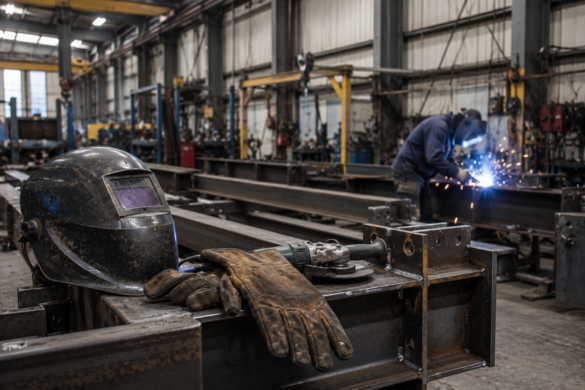
Steel fabrication keeps Montana’s construction, mining, energy, agriculture, and manufacturing industries moving. Every day, skilled workers cut, weld, lift, grind, and assemble heavy steel using specialized machinery designed to handle enormous amounts of weight and force. Although safety procedures are intended to reduce the risk of injury, serious accidents still happen when equipment fails, hazards go unaddressed, or another company creates an unsafe work environment.
Many injured workers assume workers’ compensation is their only option after an accident. While workers’ compensation may provide important benefits, it does not always prevent an injured worker from pursuing a third-party personal injury claim. When another company or contractor contributed to the accident, additional legal options may be available.
Steel fabrication combines heavy materials, industrial machinery, elevated work areas, and high-energy equipment into a single workplace. Employees often work around overhead cranes, forklifts, welding equipment, press brakes, shears, conveyors, grinders, and other machinery capable of causing catastrophic injuries in seconds.
Many fabrication projects also involve multiple companies working together. Contractors install equipment, outside vendors perform maintenance, suppliers deliver materials, and specialty subcontractors assist with repairs or construction projects. As more companies work within the same facility, identifying who was responsible for maintaining a safe work environment becomes increasingly important after an accident.
Steel fabrication accidents occur in many different ways, but they often involve equipment, materials, or work environments capable of producing severe injuries.
Workers may be struck by shifting steel, caught between heavy materials, injured by overhead loads, or involved in forklift accidents while moving fabricated components. Welding operations can lead to fires, explosions, electrical injuries, or serious burns. Machinery with missing guards or defective controls may create crushing or amputation hazards, while elevated work platforms and structural steel installations increase the risk of falls.
Each accident requires its own investigation because the cause is not always immediately obvious. Equipment failures, improper maintenance, inadequate communication between contractors, and failures to follow established safety procedures can all contribute to a serious workplace injury.
The injuries resulting from steel fabrication accidents often require extensive medical treatment because of the weight, heat, and force involved in these environments.
Crush injuries may damage bones, muscles, nerves, and internal organs while requiring multiple surgeries and lengthy rehabilitation. Workers exposed to welding operations or industrial fires may suffer severe burn injuries requiring skin grafts and reconstructive procedures. Falls from elevated work areas frequently result in traumatic brain injuries, spinal injuries, fractures, and permanent physical limitations. Even injuries that appear manageable immediately after an accident may become more serious over time as additional medical evaluations identify nerve damage, joint injuries, or conditions requiring future treatment.
Workers’ compensation is an important part of protecting injured employees, but it is not always the only legal remedy available after a serious workplace accident.
Steel fabrication facilities are often operated by multiple businesses at the same time. Contractors install equipment, outside companies perform maintenance, suppliers deliver steel, manufacturers provide specialized machinery, and subcontractors complete repairs or construction projects. When one of those companies creates an unsafe condition that injures a worker, the claim may involve much more than workers’ compensation.
A third-party personal injury claim focuses on whether someone other than the employer contributed to the accident. These claims frequently involve negligent contractors, defective equipment, unsafe job sites, or businesses that failed to maintain machinery or follow accepted safety practices.
Not every industrial accident is caused by a worker’s employer. Depending on the circumstances, responsibility may extend to an equipment manufacturer, maintenance contractor, crane company, rigging contractor, property owner, engineering firm, or another business working at the facility.
For example, a defective overhead crane, improperly maintained forklift, failed lifting sling, malfunctioning welding equipment, or unsafe temporary work platform may all create situations where another company shares responsibility for the injuries that occur. Determining who controlled the equipment, who performed maintenance, and who was responsible for workplace safety often requires reviewing inspection records, contracts, maintenance logs, and the sequence of events leading to the accident.
Industrial workplaces change quickly after an accident. Equipment is repaired, damaged components are replaced, job sites continue operating, and witnesses return to work. Waiting too long to investigate can make it more difficult to understand exactly what happened.
Preserving photographs, maintenance records, inspection reports, OSHA documentation, witness statements, and information about the equipment involved often provides valuable insight into whether another company contributed to the accident.
Recovering from a serious workplace injury often involves more than immediate medical treatment. Long-term rehabilitation, future surgeries, permanent work restrictions, and lost earning capacity may continue affecting a worker’s life long after the accident itself. Understanding whether another company contributed to the accident allows an injured worker to evaluate all available legal options rather than assuming workers’ compensation is the only source of recovery. Every workplace accident is different, and determining whether a third-party claim exists begins with understanding how the injury occurred and who was responsible for maintaining a safe work environment.
If you were seriously injured while working in steel fabrication, Conner, Marr & Pinski can review what happened, answer your questions, and explain whether a third-party personal injury claim may be available in addition to workers’ compensation.